Difference between revisions of "IOP-427 RNS-3-SS"
| Line 151: | Line 151: | ||
</ol> | </ol> | ||
== GENERAL INFORMATION == | |||
Revision as of 18:32, 2 August 2019
TP-602 - SAFETY AND DE-ENERGIZATION PROCEDURES
Register your equipment with BHS Optima, BHS's free app.
GENERAL SAFETY
- Read and understand all instructions and warnings before using or servicing this equipment.
- Keep these instructions for future reference.
- Follow all federal, state and local requirements for handling and treatment of battery wash cabinet effluent.
- Recirculation/Neutralization System (RNS) units are not designed to be shipped or transported after initial delivery.
- A licensed structural engineer should be consulted prior to installing a RNS on any building level other than the ground floor.
- Perform system and safety check before operating.
- Failure to follow these instructions and warnings may result in property damage, personal injury or death.
WORK AREA
- Keep work area clean and well lit. Cluttered work areas and poor lighting can lead to accidents.
- Clean up/contain any fluid spills immediately to prevent slips or falls.
- Be aware of potential hazards when performing any service or maintenance to the unit.
SERVICE & MAINTENANCE
Service personnel shall wear Personal Protective Equipment (PPE) appropriate for the task being performed.
LOCKOUT/TAGOUT
Lockout/tagout the BWC per your corporate policy, if damaged or not functioning properly. Lockout/tagout and deenergize all systems prior to performing any maintenance or service to unit.
LEAD-ACID BATTERIES-EXPLOSION HAZARD
.JPG)
Do not allow open flames or sparks of any kind near a battery. Highly explosive gas is generated when charging a battery that can remain in battery cells for extended periods of time after charging is complete.
- Always wear appropriate PPE including rubber apron, gloves, boots and full face shield when performing service or maintenance to any lead-acid batteries.
- Do not place metal or other conductive objects on top of battery. Arcing may occur causing damage to the battery and/or serious personal injury or death.
- Use only chargers matching the voltage and amperage of the battery being charged. Overcharging a battery can cause damage to the battery, charger and/or serious personal injury or death.
- Turn off charger before disconnecting battery from charger. Arcing between battery and charger connectors can cause damage to the connectors and/or serious personal injury or death.
BATTERY WASH WATER HAZARDS
HEAVY METALS:
Battery wash water contains heavy metals including (but not limited to) lead and antimony, which through prolonged exposure can lead to serious, long-term, adverse health conditions.
EXTREME pH LEVELS:
Highly acidic (low pH) as well as highly alkaline/ basic (high pH) solutions can cause severe burns, release toxic fumes, and cause violent chemical reactions when mixed with water or when mixed together.
- pH values outside of the BHS allowable range of 5 to 9 should be treated as “extreme” and caution should be taken to avoid direct contact with such solutions.
- Always wear appropriate PPE including rubber apron, gloves, boots and full face shield when working in contact with any battery wash water.
TREATMENT CHEMICALS:
Use of chemicals not approved by BHS to treat wash water may result in the release of toxic fumes.
OPERATIONAL SAFETY
OPERATIONAL SAFETY
- Only personnel trained in the proper and safe operation of RNS units may operate or service the RNS.
- Operators shall wear appropriate PPE suitable for working with industrial lead-acid batteries while operating the RNS (see prior page).
- All data plates, warning labels, placards, etc shall be in place and legible at all times. Contact BHS for replacement data plates, warning labels, placards or instructions.
- All users and service personnel shall be familiar with the meaning and risks associated with all data plates, warning labels, etc.
- Remove the RNS from service if damaged, defective, or operating improperly (or becomes such while operating) until repairs can be made to correct any problem(s).
- Only use BHS approved chemicals in the RNS. Severe chemical and/or toxic reactions may result.
DO’s AND DON’T’s
- DO NOT overfill the RNS reservoir.
- DO NOT operate the RNS when reservoir is empty.
- DO NOT modify or fit the RNS with attachments without prior, written approval from BHS.
- DO NOT operate the RNS with any guard or cover removed unless required for maintenance or repair.
- Disconnect RNS from all power sources before attempting to perform service or maintenance to the unit.
- DO NOT immerse any body part into the RNS holding tank water.
- DO NOT use any chemicals in the RNS that are not approved by BHS.
- DO NOT use the RNS to wash anything other than industrial lead-acid batteries.
- DO NOT use foaming type detergents in conjunction with the RNS.
- DO NOT use soda ash or similar types of neutralizers.
- Use only fully liquefi ed neutralizers.
- DO NOT spray personnel or electrical components with spray wand (if equipped).
- DO NOT use the RNS in a manner for which it is not intended. Some examples of prohibited use are but not limited to:
 » As an emergency wash station
 » As a parts washer
 » As a battery room wash-down device
 » As a battery acid disposal device
DE-ENERGIZATION
- Turn off and disconnect power to the RNS. (Note: The green power light will go out). See Figures 1.1 & 1.2.
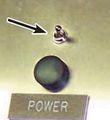
FIGURE 1.1
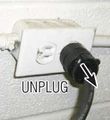
FIGURE 1.2
- Open the control panel door and remove the 17.5A fuse (the left most fuse) from the control board. See Figure 2.
- Reconnect power to and turn on the RNS.
- Press the RECIRCULATE button to activate the recirculation cycle (default time is 20 minutes). Turn off the RNS after 10 seconds. See Figure 3.
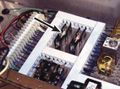
FIGURE 2
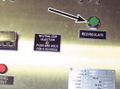
FIGURE 3
- If equipped with a spray wand, hold the trigger on the wand to release any residual pressure. If connected to a BWC, cycle the BWC through one complete wash to release residual water pressure. See Figures 4 & 5.
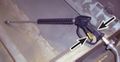
FIGURE 4
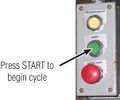
FIGURE 5
- Disconnect electrical power to the RNS.
TP-602_figure_1.1.jpg)
TP-602_figure_1.2.jpg)
TP-602_figure_2.jpg)
TP-602_figure_3.jpg)
.JPG) Failure to release any stored water pressure could result in an unexpected spray of wash water.
Failure to release any stored water pressure could result in an unexpected spray of wash water.
TP-602_figure_4.jpg)
TP-602_figure_5.jpg) Failure to disconnect electrical power to the RNS could result in electrical shock.
Failure to disconnect electrical power to the RNS could result in electrical shock.